Professional Service
Wildlife and bird-control programs for businesses, HOAs, property managers and multi-building properties.
Tell us what you are hearing, seeing, or smelling. A wildlife removal specialist can help with rodents, birds, bats, raccoons, skunks, attic damage, and exclusion repairs.
Commercial wildlife control in Orange County addresses recurring droppings, tenant complaints, roof access issues, dock or storage damage, and activity across multiple structures. A single trap visit rarely fixes a shopping center, HOA campus, or multi-building property. Pressure moves between roofs, loading zones, trash enclosures, and shared vents. Work must be prioritized for safety and access, then phased so occupants and operations are not disrupted unnecessarily.
Advanced Wildlife Removal documents pressure areas, prioritizes safety and access, and phases removal, exclusion, and cleanup work. Maintainable exclusion systems, monitoring, and property-management recommendations keep results durable. That commercial path coordinates specialty pages such as bird control, pigeon control, rodent proofing, and residential-scale wildlife removal when a site needs species-specific scopes inside a larger program.
Property managers often call after repeated tenant tickets about roof noise, droppings at entries, or animals at docks. HOA boards see the same parapet or trash area fail every season. In every case the plan should map buildings and pressure zones—not sell a one-day residential package for a multi-acre site.
This page explains how commercial wildlife and bird-control programs work across Orange County and select Los Angeles County properties, how inspections are organized by building, how phasing and maintainable exclusion fit together, and why rodent warranty language applies only when qualifying exclusion is written into the agreement.
For more detail, read our guide on how to choose a wildlife removal company in Orange County.
Commercial pressure shows up as recurring complaints across buildings—not a one-time backyard sighting.
Single-home attic wildlife: start with wildlife removal. Bird-ledge or solar focus: bird control, pigeon control, or solar panel bird proofing. Site-wide rodent sealing: rodent proofing.
Inspection, active control, exclusion and cleanup are scoped to the conditions found at the property.
Recurring droppings, tenant complaints, roof access, dock or storage damage and activity across multiple structures.
Commercial inspections document activity by building and pressure area, including roofs, loading or storage zones, tenant spaces, utilities and sanitation conditions, so work can be prioritized and phased.
Document pressure areas, prioritize safety and access, and phase removal, exclusion and cleanup work.
Use maintainable exclusion systems, monitoring and property-management recommendations.
Commercial work starts with building-by-building pressure mapping, then prioritized removal and exclusion, then maintainable systems and cleanup coordination.
Commercial inspections document activity by building and pressure area, including roofs, loading or storage zones, tenant spaces, utilities, and sanitation conditions, so work can be prioritized and phased. Photos and zone notes help managers approve scopes and schedule access.
Document pressure areas, prioritize safety and access, and phase removal, exclusion, and cleanup work. Urgent odor, trapped animals, or high-traffic droppings zones may lead the schedule while lower-pressure elevations wait for the next phase.
Use maintainable exclusion systems, monitoring, and property-management recommendations. Hardware and sealing are chosen for serviceability on commercial roofs and docks—not one-time patches that cannot be inspected later.
Cleanup is coordinated around access, occupants, and operations and can address droppings, nesting debris, odor, or contaminated materials identified in the commercial scope. Phasing keeps store hours, tenants, and HOA rules in the written plan.
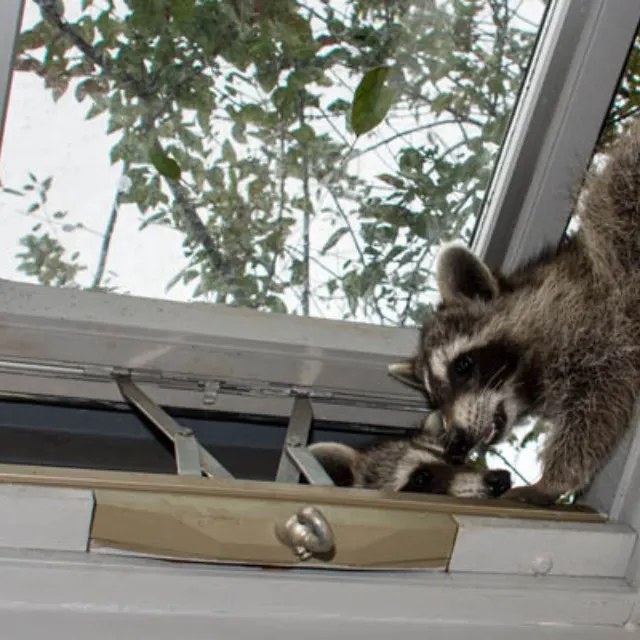
Cleanup is coordinated around access, occupants and operations and can address droppings, nesting debris, odor or contaminated materials identified in the commercial scope.
The 10-year rodent protection warranty does not automatically apply to this service. It applies only if separate qualifying rodent exclusion repairs are expressly covered in the signed agreement.
Retail centers, office parks, apartments, and HOAs across Orange County share tile roofs, trash enclosures, loading docks, and connected parapets that move wildlife and bird pressure between buildings. Mild weather keeps activity year-round. Sites in Irvine, Anaheim, Huntington Beach, Newport Beach, Costa Mesa, Tustin, Orange, Fullerton, Yorba Linda, and Mission Viejo commonly cycle the same complaint tickets until exclusion is maintainable and mapped by zone. Coastal and inland campuses share those structural patterns even when species mix shifts.
We provide commercial wildlife control across Orange County and select Los Angeles County properties based on scope and availability. Multi-building proposals list priority zones, access needs, and phase order so boards and managers can approve budgets without guessing. Species-specific scopes—rodent proofing, pigeon control, solar proofing—are nested inside the program when inspection shows they are required.
Older strip centers and newer planned communities need different access plans, but the rule stays the same: map by building, prioritize safety and complaints, install maintainable exclusion, and coordinate cleanup around operations. One-off residential-style visits without phasing are why the same dock or parapet fails again next month.
Coverage: Orange County and Los Angeles County. Related specialty scopes: bird control, pigeon control, and rodent proofing.
Removing animals from one roof while the next building’s vents stay open relocates the complaint. A complete commercial wildlife program should:
The 10-year rodent protection warranty does not automatically apply to commercial wildlife control. It applies only if separate qualifying rodent exclusion repairs are expressly covered in the signed agreement. Review warranty conditions when rodent sealing is included in the commercial scope.
Bird control for rooflines, ledges, vents, commercial structures and solar panels using site-appropriate deterrents.
Pigeon control and proofing for solar panels, rooflines, ledges and commercial roosting areas.
Our rodent proofing service identifies and permanently seals roofline gaps, vents, utility penetrations, crawlspace openings and other access points used by rats and mice.
Humane, species-appropriate wildlife removal for attics, crawlspaces, rooflines and exterior shelter areas.
Orange County, Los Angeles County and select nearby Southern California communities.
Businesses, HOAs, property managers, and multi-building sites with recurring wildlife or bird pressure across structures. Single-home problems are usually scoped on residential service pages.
We document activity by building and pressure area—roofs, docks, tenant spaces, utilities, and sanitation—so work can be prioritized and phased around access and operations.
Yes. Phasing is part of the written plan so urgent zones lead and lower-pressure elevations follow without unnecessary disruption.
When inspection shows those pressures, specialty scopes such as bird control, pigeon control, solar proofing, or rodent proofing are nested inside the commercial plan.
Cleanup is coordinated around access, occupants, and operations and can address droppings, nesting debris, odor, or contaminated materials identified in the scope.
Not automatically. It applies only if separate qualifying rodent exclusion repairs are expressly covered in the signed agreement.
They can if connected roofs and openings stay open. Mapping by building and installing maintainable exclusion across pressure zones is how shift is reduced.
Same-day or next-day inspections may be available depending on city, site access, and schedule. Call with property type, address area, and the main complaint zones.
24/7 emergency service is available. Get a documented plan for activity by building, occupant and operational safety, priority removal, maintainable exclusion, cleanup coordination and recurring-pressure monitoring.
Advanced Wildlife Removal
Call now or send a secure request with the property location and wildlife problem.