Professional Service
Humane, species-appropriate wildlife removal for attics, crawlspaces, rooflines and exterior shelter areas.
Tell us what you are hearing, seeing, or smelling. A wildlife removal specialist can help with rodents, birds, bats, raccoons, skunks, attic damage, and exclusion repairs.
Wildlife removal in Orange County is rarely a single trap-and-leave job. Raccoons, opossums, squirrels, skunks, bats, and other nuisance animals use tile roofs, attic voids, crawlspaces, decks, vents, and landscaped perimeters as shelter. Mild Southern California weather keeps many species active year-round, so a den or nest that appears “temporary” often becomes a recurring entry pattern if the structure stays open.
Advanced Wildlife Removal inspects the property first, identifies the species and pressure area, then builds a removal and prevention plan matched to what is actually happening—not a generic wildlife package. That may include humane removal, dependent-young considerations, lawful exclusion timing, entry-point repair, and cleanup only where contamination or odor is confirmed. Residential homes, HOAs, and commercial buildings across Orange County and Los Angeles County are evaluated the same way: evidence first, then a written scope.
If you are hearing nighttime movement above the ceiling, finding torn vents, noticing digging under a deck, or dealing with a sudden odor after animals may have been sealed inside, this page explains how professional wildlife removal works locally and what a complete job should include.
For more detail, read our guide on residential wildlife removal for Orange County properties.
Many Orange County calls start with a noise complaint and turn into a multi-species or multi-opening problem once the attic or exterior is inspected. Early signs matter because delayed response can mean more nesting material, more contamination, or young animals that change the removal timeline.
Not every noise is wildlife, and not every wildlife problem is the same species. Inspection separates roof-rat travel, squirrel daytime activity, raccoon denning, and bird nesting so the method and sealing plan fit the animal and the building.
Inspection, active control, exclusion and cleanup are scoped to the conditions found at the property.
Large nighttime movement, damaged vents, nesting, digging, odor and animals entering structural openings.
Wildlife inspections identify the species, den or nesting area, dependent young when present, structural access and any legal or seasonal limits that affect the removal plan.
Identify the species and legal removal method, then address the active animal and dependent young when present.
Repair access points after animals are out and correct attractants or shelter conditions around the property.
Our wildlife removal process is built around inspection, species-appropriate control, structural prevention, and cleanup only when conditions require it. Skipping any of those steps is why many properties see the same animal type return through a nearby opening weeks later.
We examine interior and exterior routes together: attic edges, vents, eaves, crawlspace openings, decks, utility penetrations, and landscaping that creates travel bridges. Tracks, droppings, nesting, rub marks, odor, and fresh damage help confirm which species is active and whether dependent young may be present. Legal and seasonal limits can affect timing—especially for bats and nesting birds—so those factors are part of the plan, not an afterthought.
Once the den or nesting area is understood, we use a method appropriate to that species and site. That may involve trapping, one-way exclusion where suitable, nest management, or other lawful approaches that resolve the active problem without leaving animals sealed inside. Family groups and young change the sequence; sealing too early can create odor, damage, or welfare problems that are harder and more expensive to correct later.
After animals are confirmed out, we address the openings that made the structure attractive: torn vents, roof returns, gaps at eaves, foundation or crawlspace access, and other vulnerable transitions included in the written scope. Attractants such as accessible pet food, open trash, or easy shelter under decks are discussed so prevention is not limited to a single repaired hole.
Wildlife denning can leave droppings, nesting debris, flattened or stained insulation, and odor. Cleanup is evaluated after every animal is out. Scope ranges from targeted debris removal to broader attic or crawlspace sanitation depending on distribution and access. Insulation removal or replacement is itemized when materials cannot reasonably be restored.
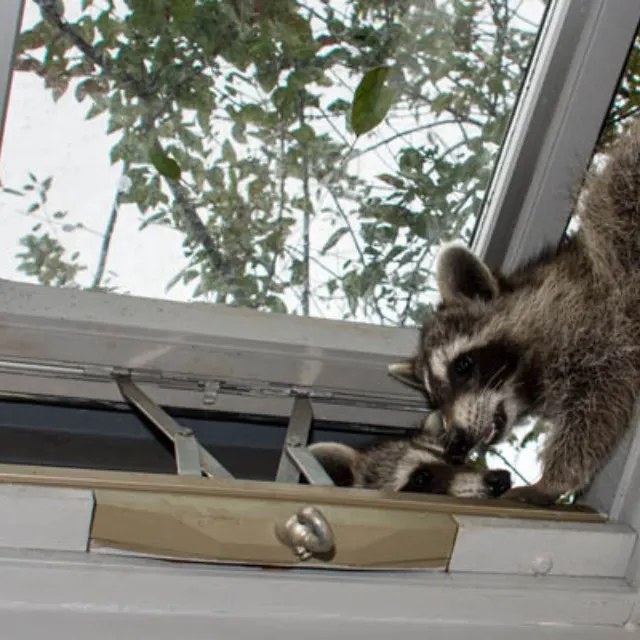
When wildlife has left droppings, nesting material, odor or damaged insulation, cleanup and sanitation are evaluated after every animal is confirmed out of the structure.
The 10-year rodent protection warranty does not automatically apply to this service. It applies only if separate qualifying rodent exclusion repairs are expressly covered in the signed agreement.
Orange County’s mix of tile-roof neighborhoods, mature landscaping, coastal bird pressure, hillside lots, and dense commercial corridors creates wildlife opportunities that look different from colder inland markets. Roof edges and attic vents stay usable year-round. Tree-to-roof travel routes are common in established communities. Coastal and inland cities share many of the same structural weak points—returns, eaves, garage transitions, and crawlspace vents—even when the species mix shifts slightly by neighborhood.
We regularly work properties throughout Irvine, Anaheim, Huntington Beach, Newport Beach, Costa Mesa, Tustin, Orange, Fullerton, Yorba Linda, Mission Viejo, and surrounding Orange County communities, plus select Los Angeles County locations such as Long Beach and Lakewood based on scope and availability. Local building styles matter: a planned-community tile roof in Irvine presents different inspection priorities than an older eave-and-crawlspace home in Long Beach or a coastal property with deck and bird pressure in Huntington Beach.
Commercial and multi-unit properties add another layer—loading areas, roof returns shared across units, trash enclosures, and tenant schedules. Wildlife removal on those sites still starts with evidence and access mapping, then phases work so occupants and operations are considered in the written plan. Review our Orange County coverage and full service areas for location detail, or compare specialty pages such as raccoon removal, squirrel removal, and dead animal removal when the species is already clear.
Removing the animal without correcting access is the most common reason wildlife problems repeat. An open vent, roof gap, or crawlspace opening remains an invitation for the next raccoon, opossum, or squirrel using the same travel corridor. A complete wildlife removal job ties three outcomes together:
Warranty language matters here as well. The company’s 10-year rodent protection warranty applies only to qualifying rodent exclusion repairs expressly written into a signed agreement. General wildlife removal, cleanup, and insulation work are not automatically covered. If rodent exclusion is also needed—common when rats share the same attic as larger wildlife—that work is scoped and documented separately. See warranty conditions and rodent proofing when both issues are present on one property.
Raccoon inspection and humane removal for attics, roofs, crawlspaces and denning areas near structures.
Opossum inspection and removal for crawlspaces, garages, attics and sheltered exterior areas.
Squirrel removal and exclusion for rooflines, eaves, attics and tree-access points.
Dead-animal inspection, location and removal for attics, crawlspaces, wall-adjacent voids and exterior areas.
Orange County, Los Angeles County and select nearby Southern California communities.
We handle common nuisance wildlife found in local homes and businesses, including raccoons, opossums, squirrels, skunks, bats, and other species identified during inspection. The method depends on the animal, location, and any legal or seasonal limits that apply.
Yes. Wildlife inspections identify the species, den or nesting area, dependent young when present, structural access, and conditions that affect the removal plan. Work starts from evidence at the property, not a one-size-fits-all trap package.
Yes. Attics, crawlspaces, rooflines, decks, and exterior shelter areas are common wildlife locations in Orange County. We inspect interior evidence and exterior openings together so removal and sealing address the full travel path.
Dependent young change timing and method. Sealing adults out while young remain inside can create odor, damage, and welfare problems. We confirm family status during inspection and plan removal so animals are not trapped behind permanent repairs.
Cleanup is evaluated after every animal is confirmed out. Droppings, nesting material, odor, and damaged insulation can be included when present. The scope is written separately so you see exactly what sanitation or material removal is proposed.
No. The 10-year rodent protection warranty does not automatically apply to general wildlife removal. It applies only if separate qualifying rodent exclusion repairs are expressly covered in the signed agreement.
Yes. Commercial wildlife control and multi-building properties are inspected by pressure area—roofs, loading or storage zones, shared vents, and tenant spaces—so work can be prioritized and phased around access and operations.
Same-day inspections may be available depending on location, technician availability, and the type of wildlife problem. Call with the city, property type, and what you are hearing, seeing, or smelling so we can schedule appropriately.
24/7 emergency service is available. Get a clear plan for species identification, den or nesting status, humane removal, structural access, cleanup needs and prevention after every animal is out.
Advanced Wildlife Removal
Call now or send a secure request with the property location and wildlife problem.