Professional Service
Squirrel removal and exclusion for rooflines, eaves, attics and tree-access points.
Tell us what you are hearing, seeing, or smelling. A wildlife removal specialist can help with rodents, birds, bats, raccoons, skunks, attic damage, and exclusion repairs.
Squirrel removal in Orange County addresses daytime attic noise, chewing, nesting material, roof travel, and entry near eaves or vents. Squirrels are active in daylight, which helps separate them from nocturnal raccoons and rats—but the damage to fascia, vents, and insulation can still be serious. Tree limbs that touch the roof create easy bridges. Once a nest is established, chewing expands openings and dependent young change when permanent repairs can close the void.
Advanced Wildlife Removal identifies the nest and entry route before removing squirrels and checking for dependent young. Roof openings are repaired and direct tree access is reduced where practical so the attic is not reused. That squirrel-focused path sits under broader wildlife removal, often pairs with attic cleanup, and may need rodent proofing when rats share the same roofline. Nighttime heavy thumping and torn vents more often indicate raccoon removal; thin pellet trails without daytime roof running may be rats in the attic.
Homeowners often call after hearing rolling or scampering above the ceiling between morning and late afternoon, then find chewed eaves, nesting debris, and entry at a vent or fascia gap. Others notice a squirrel using the same limb-to-roof path every day. In both cases the plan should match nest location and young status—not a seal installed while animals remain inside.
This page explains how professional squirrel removal works across Orange County and select Los Angeles County properties, which signs point to attic or eave nesting, how tree access and roof repairs fit the sequence, and why rodent warranty language does not automatically cover wildlife work.
For more detail, read our guide on seasonal wildlife prevention tips for Orange County homes.
Squirrel activity is typically daytime, roof-focused, and accompanied by chewing at eaves or vents.
Nighttime heavy thumping and torn vents: raccoon removal. Small pellets and night-only travel: rats in the attic or rodent removal. After nesting contamination: attic cleanup. Sudden odor after sealing: dead animal removal.
Inspection, active control, exclusion and cleanup are scoped to the conditions found at the property.
Daytime attic noise, chewing, nesting material, roof travel and entry near eaves or vents.
Squirrel inspections follow daytime roof travel, chewing, eave or vent openings and attic nesting evidence while checking carefully for dependent young.
Identify the nest and entry route before removing squirrels and checking for dependent young.
Repair roof openings and reduce direct tree access where practical.
Squirrel work starts with nest and entry mapping, then removal with young checks, then roof repair and tree-access reduction.
Squirrel inspections follow daytime roof travel, chewing, eave or vent openings, and attic nesting evidence while checking carefully for dependent young. Attic signs and exterior chew points are matched so the plan targets the real entry—not every decorative vent on the roof.
Once the nest and route are clear, we remove squirrels using a method suited to the site and check for dependent young. Sealing adults out while young remain inside creates odor and welfare problems. Timing is written into the scope before permanent eave or vent repairs begin.
Repair roof openings and reduce direct tree access where practical. Adjacent weak fascia and vent edges on the same travel path are checked so the next squirrel does not reopen a nearby gap. Tree trimming recommendations support the structural repair when limbs bridge to the roof.
Attic nesting material, droppings, and damaged insulation can be removed after squirrels are out and the roofline opening is ready for repair. Cleanup is itemized separately from removal and exclusion on the proposal.
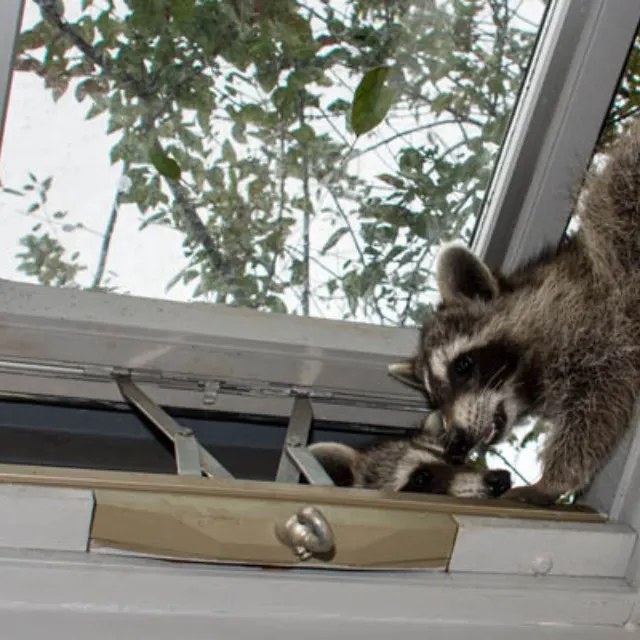
Attic nesting material, droppings and damaged insulation can be removed after squirrels are out and the roofline opening is ready for repair.
The 10-year rodent protection warranty does not automatically apply to this service. It applies only if separate qualifying rodent exclusion repairs are expressly covered in the signed agreement.
Mature street trees, tile roofs, and mild weather give squirrels year-round attic and eave opportunities. Limb-to-roof bridges are common in established neighborhoods. Homes in Irvine, Anaheim, Huntington Beach, Newport Beach, Costa Mesa, Tustin, Orange, Fullerton, Yorba Linda, and Mission Viejo frequently show chewed fascia or vent edges after a nest is established. Coastal and inland cities share those eave and return weak points even when canopy density differs by block.
We provide squirrel removal across Orange County and select Los Angeles County properties based on scope and availability. HOAs and multi-unit buildings often need nest mapping by roof section because shared eaves and returns can move animals between units. Documenting young status and openings keeps proposals clear for managers who must approve phased roof access around tenants.
Older wood-eave stock and newer planned-community tile roofs produce different chew patterns, but the rule stays the same: find the nest and entry, get every animal out, repair the opening, and reduce tree bridges where practical. Skipping young checks is why sealed attics develop odor days later.
Coverage: Orange County and Los Angeles County. Broader multi-species work: wildlife removal. Shared roofline rats: rodent proofing.
Closing an eave gap while a nest remains active traps animals and damages insulation. A complete squirrel removal plan should:
The 10-year rodent protection warranty does not automatically apply to squirrel removal. It applies only if separate qualifying rodent exclusion repairs are expressly covered in the signed agreement. Review warranty conditions when both wildlife and rodent sealing are on one proposal.
Humane, species-appropriate wildlife removal for attics, crawlspaces, rooflines and exterior shelter areas.
Professional attic cleanup after rodent or wildlife activity, including debris, droppings, odor and insulation evaluation.
Our rodent proofing service identifies and permanently seals roofline gaps, vents, utility penetrations, crawlspace openings and other access points used by rats and mice.
Dead-animal inspection, location and removal for attics, crawlspaces, wall-adjacent voids and exterior areas.
Orange County, Los Angeles County and select nearby Southern California communities.
Daytime scampering and chewing at eaves often point to squirrels. Night-only lighter travel and pellet trails more often indicate rats. Inspection confirms the species.
Dependent young change timing. We check for young and plan removal so animals are not sealed inside when the roof opening is repaired.
Structural repair closes the entry. Reducing direct tree access is recommended where practical and may be coordinated separately depending on scope and property rules.
Cleanup is evaluated after animals are out. Nesting material, droppings, and damaged insulation can be scoped when contamination is present.
No. The rodent protection warranty does not automatically apply to wildlife removal. It applies only if separate qualifying rodent exclusion repairs are written into the signed agreement.
Yes. Shared eaves and vents are common. Rodent proofing may be scoped separately when rat evidence is also present.
They can if openings and tree bridges remain. Repairing the entry and reducing roof access are how repeat nesting is reduced.
Same-day inspections may be available depending on city, access, and schedule. Call with when you hear noise and any chewed eaves or vents you have seen.
24/7 emergency service is available. Get a clear plan for squirrel activity, nest and dependent-young checks, humane removal, roofline repairs, attic cleanup needs and tree-access prevention.
Advanced Wildlife Removal
Call now or send a secure request with the property location and wildlife problem.