
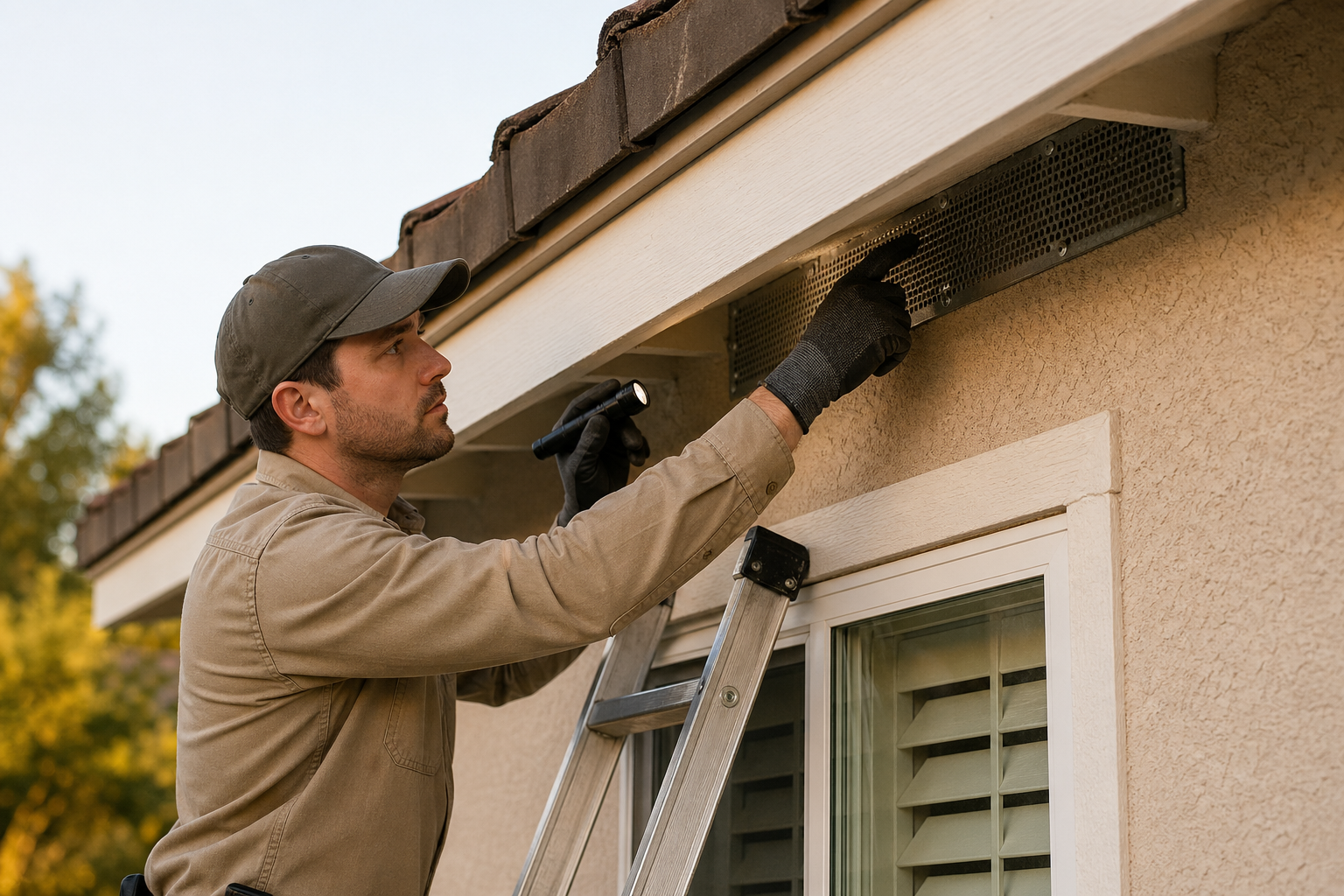
Finding a bat inside a house, garage, office, or attic creates two separate questions that should not be confused. The first is whether a person or pet may have had direct contact with the bat and needs guidance from public-health, medical, animal-control, or veterinary professionals. The second is how the bat entered the structure and whether additional bats may be using the roofline, attic, vent system, or another protected space.
That distinction is especially important in 2026. A CDC report published in January 2026 described two U.S. rabies deaths associated with bat encounters in 2024, including one in California. In both cases, the people recognized that they had encountered a bat but did not obtain a public-health risk assessment or medical care before symptoms began. Orange County also announced a rabies-positive bat in the City of Orange in 2025. These events do not mean that every bat is sick. They do reinforce why an indoor bat should be handled calmly, without bare-hand contact, and with the right agency involved when exposure is possible.
This guide explains the immediate safety steps, the signs of an attic or roofline roost, the timing concerns that affect bat exclusion, and how a professional bat exclusion inspection differs from emergency public-health response.
Why an Indoor Bat Requires a Different Response
Bats are beneficial wildlife. California bats consume insects, support natural ecosystems, and generally avoid people. The California Department of Fish and Wildlife notes that bats may sometimes roost in attics, barns, and other buildings or become trapped inside a house. Their presence is not automatically evidence of disease or an aggressive animal.
At the same time, bats have small teeth, and a bite may not leave an obvious mark. The California Department of Public Health identifies bats and skunks as the wild animals most often found with rabies in the state. Rabies is rare in people, but it is extremely serious once symptoms begin and is preventable when a possible exposure is evaluated promptly.
The correct response therefore depends on the circumstances. A bat flying outdoors at dusk is normal wildlife activity. A bat roosting somewhere in an attic is primarily a building-exclusion problem, provided no one has had contact with it. A bat found in an occupied bedroom, handled by a person, caught by a pet, or discovered where contact cannot be ruled out is first a public-health or animal-control matter.
First Decide Whether Exposure May Have Occurred
Possible human or pet exposure
Do not release or discard the bat before speaking with the proper authority if any of the following may have occurred:
- A person touched the bat with bare hands or was bitten or scratched.
- The bat was found in a room with someone who was sleeping.
- The bat was near an unattended child or a person who may not be able to describe an encounter.
- The bat was found with someone who was impaired or intoxicated and might not know whether contact occurred.
- A dog, cat, or other pet caught, mouthed, or had close physical contact with the bat.
- Bat saliva may have contacted an eye, mouth, nose, or an open wound.
Keep people and pets away, close off the room if that can be done safely, and contact a healthcare provider and local public-health or animal-control authorities. The current OC Animal Care bat guidance lists the Rabies Control Desk at (714) 796-6421 during weekday business hours and (714) 259-1122 after hours, weekends, and holidays. Contact information can change, so verify it on the county website when using this guide.
If a pet had contact with the bat, contact the pet’s veterinarian as well. Do not assume a current vaccine means the encounter can be ignored; the veterinarian and animal-control authorities can explain the appropriate next steps.
No known contact and the bat is only outside or in an attic
If the bat is outside, flying normally around dusk, and has not contacted a person or pet, keep a respectful distance and leave it alone. If activity appears limited to an attic, roof gap, eave, or exterior roost, avoid blocking the opening immediately. Schedule a building inspection to determine how many access points exist, whether young bats may be present, and whether the timing is appropriate for exclusion.
When you are uncertain whether contact occurred, treat the uncertainty as a reason to call the appropriate public-health authority. A wildlife inspection can address structural entry, but it cannot determine whether a person needs medical treatment.
What to Do When a Bat Is in the Living Space
A bat circling a bedroom or living room may be trying to find an exit rather than approaching people. Panic, swinging objects, chasing the animal, or trying to grab it can increase the chance of contact. Use the following sequence while preserving the bat for possible testing when exposure cannot be ruled out:
- Move children and pets away from the area.
- Close interior doors to keep the bat in one room if this can be done without approaching it.
- Do not touch the bat, even if it appears motionless or dead.
- If possible exposure occurred, do not open an exterior door or window and release the bat before contacting animal control or public health.
- Call the OC Rabies Control Desk, your local animal-control agency, or a healthcare provider for exposure guidance.
- After the immediate situation is resolved, inspect the building to determine how the bat entered.
The CDC’s current bat and rabies prevention guidance emphasizes avoiding direct contact and obtaining a professional risk assessment after a possible encounter. If you know you were bitten or scratched, wash the area with soap and running water and seek medical care immediately.
Signs Bats May Be Using an Attic or Roofline
One bat in the living space may enter through an open door or window, but it can also be the first visible sign of a building-access problem. Orange County tile roofs, fascia gaps, eaves, attic vents, chimney transitions, wall penetrations, and roof-return details can create narrow sheltered openings.
Warning signs that deserve a closer inspection include:
- Repeated bat activity near the same roof edge shortly after sunset.
- Chirping, rustling, or light scratching from an attic, eave, or wall void around dusk or dawn.
- Small dark droppings collecting below a roof gap, vent, fascia board, or wall joint.
- Dark rub marks or staining around a narrow exterior opening.
- A persistent musty odor in a confined attic or upper wall area.
- More than one indoor bat encounter over a short period.
These signs can overlap with birds, rodents, and other wildlife. Droppings alone should not be used to identify the species. A proper wildlife inspection considers the location, shape and distribution of evidence, time of activity, exterior flight pattern, and the structure itself.
Why Bat Exclusion Timing Matters
Bat exclusion is not simply a matter of filling the first visible hole. If an active opening is sealed while bats remain inside, the animals may move deeper into the building, enter occupied rooms, or die in an inaccessible space. If flightless young are present, closing the adults out can separate the colony and create an animal-welfare and odor problem.
The CDC cautions that bat-proofing from May through August requires special care because young bats may be unable to leave. Late summer can be a transition period, but timing varies by species, weather, roost conditions, and local regulations. A calendar date alone does not establish that exclusion is safe. The property should be inspected for current activity and evidence of a maternity roost before one-way devices or final sealing are considered.
California bats are protected wildlife. The public should not kill, harm, or keep a bat. Species-appropriate exclusion focuses on allowing bats to leave safely when conditions permit, preventing reentry, and sealing the remaining structural openings only after the building is confirmed clear.
How a Professional Bat Inspection and Exclusion Plan Works
A bat service should begin with questions, not hardware. The technician needs to know where the bat was seen, whether it was in an occupied room, what time activity occurs, whether pets were involved, and whether the county or a healthcare provider has already been contacted. Possible exposure is routed to the appropriate authority before structural work proceeds.
A building-focused inspection may include:
- Examining roof returns, tile transitions, vents, soffits, fascia boards, chimneys, siding joints, and utility penetrations.
- Looking for staining, droppings, odor, rub marks, and repeated travel paths.
- Observing dusk exit activity when the roost location is unclear.
- Distinguishing active openings from secondary gaps that could become future entry points.
- Evaluating whether young bats may be present or whether exclusion should be delayed.
- Planning one-way exits where appropriate and permitted.
- Sealing secondary openings before the final active entry is closed.
- Confirming that activity has stopped before completing permanent repairs.
This sequence is different from trapping a single animal. The goal of professional bat removal and exclusion is to correct the building access pattern without trapping bats inside or creating new routes into the living space.
Attic Cleanup After Bat Activity
Removing bats does not automatically resolve contaminated material, odor, or damaged insulation. The amount and location of droppings should determine the cleanup plan. A few exterior droppings below a temporary roost are different from accumulated material in a confined attic.
Avoid dry sweeping, vacuuming, or disturbing a significant accumulation before it has been assessed. Cleanup may require controlled removal, appropriate protective equipment, sanitation, odor-source correction, and replacement of affected insulation. The work should be coordinated with the exclusion plan so cleanup does not begin while active bats are still using the space.
Advanced Wildlife Removal provides attic cleanup and sanitation when it is included in the written scope. The inspection determines whether cleanup is necessary, what materials are affected, and whether another specialist is appropriate.
Common Bat-Control Mistakes to Avoid
Sealing the opening as soon as you find it
An active entry should not be permanently closed until the roost condition and exclusion timing are understood. Premature sealing is one of the fastest ways to move bats from an attic into the occupied part of a building.
Handling a grounded or motionless bat
A sick bat may be easier to approach than a healthy one. Never pick it up with bare hands. Keep people and pets away and call animal control, especially if exposure may have occurred.
Using poison, glue traps, or improvised netting
These methods can harm protected wildlife, leave animals inside the structure, and create sanitation or odor problems. Bat exclusion requires species-appropriate methods and careful control of every entry point.
Cleaning before the roost is inactive
Cleanup does not stop entry. If the structural problem remains open, new activity can contaminate the same area again.
Assuming one indoor bat is the entire problem
Sometimes it is an isolated event. Sometimes it indicates a roofline opening or attic roost. An exterior inspection helps separate those situations.
Orange County Bat-Prevention Checklist
- Keep exterior doors and unscreened windows closed after dusk when practical.
- Repair damaged window, gable, and attic-vent screens.
- Inspect fascia, soffits, roof returns, chimney flashing, and tile transitions for narrow gaps.
- Use properly fitted chimney caps and vent covers that do not restrict required airflow.
- Keep attic access doors and utility penetrations sealed from the living space.
- Watch the roofline at dusk if repeated bat activity is suspected.
- Do not complete exclusion solely from a daytime visual check.
- Keep pets’ rabies vaccinations current and prevent contact with grounded wildlife.
- Request an inspection before a small opening becomes a recurring indoor route.
Homeowners throughout Orange County can also review our broader guide to what to do when wildlife gets into the home and our complete service-area information.
Bat Safety and Exclusion FAQ
Does every bat in a house have rabies?
No. Most bats are not rabid, and bats provide important ecological benefits. The concern is that a bite or scratch can be difficult to detect, so possible contact should be evaluated by public-health or medical professionals rather than dismissed.
Should I let an indoor bat fly out through an open window?
Not when human or pet exposure may have occurred. Public-health authorities may need the bat available for testing. Isolate the room if that can be done safely and call animal control or the local health department first.
Can I seal a bat entry point during summer?
Not automatically. Young bats may still be unable to fly, and timing varies. The roost should be assessed before exclusion begins so bats are not trapped inside.
What is the difference between animal control and a wildlife-exclusion company?
Animal control and public-health agencies address exposure, rabies testing, and immediate public-safety concerns. A wildlife-exclusion company inspects the building, identifies access points, plans appropriate one-way exclusion, seals openings, and evaluates cleanup needs. Some incidents require both roles.
When should I request a bat inspection?
Schedule an inspection after repeated dusk activity at one roof opening, more than one indoor encounter, droppings below an attic gap, sounds around dusk or dawn, or evidence of an attic roost. If possible contact occurred, call the appropriate health or animal-control authority first.
Request an Orange County Bat Inspection
A bat problem requires the right sequence: address possible exposure, identify the active opening, confirm whether exclusion timing is appropriate, allow bats to leave safely, seal the structure, and evaluate cleanup only after the roost is inactive.
24/7 Emergency Service Available for urgent wildlife situations. Advanced Wildlife Removal provides inspection-driven bat exclusion and wildlife-entry repair for homes and managed properties in Orange County and nearby service areas. Call (714) 364-0629 or Request Free Inspection and describe where the bat was seen, the time of activity, and whether anyone or any pet may have had contact.
Public-health note: This article provides general property and wildlife information, not medical advice. For a possible bite, scratch, or other bat exposure, contact a healthcare provider and the appropriate local public-health or animal-control agency promptly.