Roof rats are one of the most common rodent problems around Orange County homes and commercial properties. They move comfortably above ground, travel along fences and utility lines, feed in fruit trees, and use mature landscaping as cover. Once they reach a roofline, a damaged vent, tile gap, fascia return, garage opening, or utility penetration can lead them into an attic or wall void.
The Orange County Mosquito and Vector Control District identifies the roof rat as an agile climbing rat that frequently enters buildings and uses fences and utility lines as neighborhood runways. UC IPM’s updated California rat guidance also emphasizes that successful control requires sanitation, structural exclusion, and population control. Removing one rat without correcting food sources and entry points often leaves the conditions for another animal to return.
This 2026 guide explains how to recognize roof-rat activity, where to inspect an Orange County property, what a complete control plan should include, and how to approach contaminated areas safely. It is designed for homeowners, property managers, restaurants, offices, warehouses, HOAs, and anyone deciding whether attic sounds or droppings require professional rodent removal.
Why Roof Rats Thrive Around Orange County Properties
Orange County neighborhoods provide many of the conditions roof rats prefer. Citrus, avocado, nut, and ornamental trees provide food and elevated travel routes. Dense ivy, bougainvillea, oleander, palms, and other heavy vegetation can create protected nesting areas. Outdoor pet food, bird seed, fallen fruit, open trash, standing water, and clutter add reliable resources close to homes.
The architecture also matters. Tile roofs contain transitions, returns, and edge details that deserve close inspection. Additions can create new roof intersections. Attic vents and crawlspace screens deteriorate. Garage doors may not close tightly at the corners. Air-conditioning lines, plumbing, electrical conduit, and cable penetrations can leave gaps that are easy to miss from the ground.
A roof rat does not need to begin at the roof. It may climb a tree, vine, fence, downspout, rough wall surface, or utility line and then move across the building. That is why an inspection focused only on ground-level holes can miss the active route.
Common Signs of Roof-Rat Activity
Most property owners hear or find evidence before they see the animal. Roof rats are generally most active after dark, and their travel paths may be hidden above ceilings, behind cabinets, or inside insulation. One sign does not always confirm the species, but several signs in the same area justify a closer inspection.
Scratching or movement above the ceiling
Light running, scratching, or gnawing in an attic or upper wall is consistent with roof-rat activity. The timing and location help narrow the route. Sounds near dusk may occur as rats leave a nesting area to forage, while movement before dawn may mark their return.
Droppings along travel routes
Roof-rat droppings are commonly found near shelter, food, water, attic runways, garage storage, or appliance areas. Orange County Vector Control describes them as dark, spindle-shaped droppings that are often scattered rather than placed in one neat pile. Droppings should not be handled dry, swept, or vacuumed before they are disinfected.
Gnawing and rub marks
Fresh gnawing on wood, plastic, wiring, stored food containers, or vent materials can indicate an active route. Repeated contact with the same beam, pipe, wall edge, or opening can also leave a dark greasy rub mark.
Damaged fruit and empty snail shells
Partially eaten citrus, avocados, nuts, or other backyard produce can point to roof rats. Empty snail shells below shrubs, fences, or sheltered feeding spots are another locally recognized clue. These outdoor signs can help trace activity toward a roof, garage, shed, or dense planting.
Nests and disturbed insulation
Shredded paper, fabric, plant material, or insulation may be gathered into a nest. In an attic, compressed or tunneled insulation, repeated runways, urine staining, and localized odor can reveal where the animals spend time.
Roof Rats, Norway Rats, or Mice?
Correct identification affects where traps are placed and which openings receive the closest attention. Roof rats are slender climbers with tails longer than their head and body combined. They favor elevated areas, including trees, attics, ceiling voids, cabinets, and upper storage. Norway rats are larger and heavier, often travel at ground level, and are more closely associated with burrows, foundations, trash areas, and lower floors. House mice are much smaller and can use very narrow openings.
Location provides useful evidence, but it is not a perfect rule. Roof rats can travel at ground level, and more than one rodent species can use the same property. Track patterns, dropping size, gnaw marks, camera observations, and the layout of the building should be considered together.
A professional inspection should identify the most likely species before committing to a control plan. Guessing from a single noise can result in ineffective trap placement or repairs that overlook the actual route.
Where Roof Rats Enter Orange County Buildings
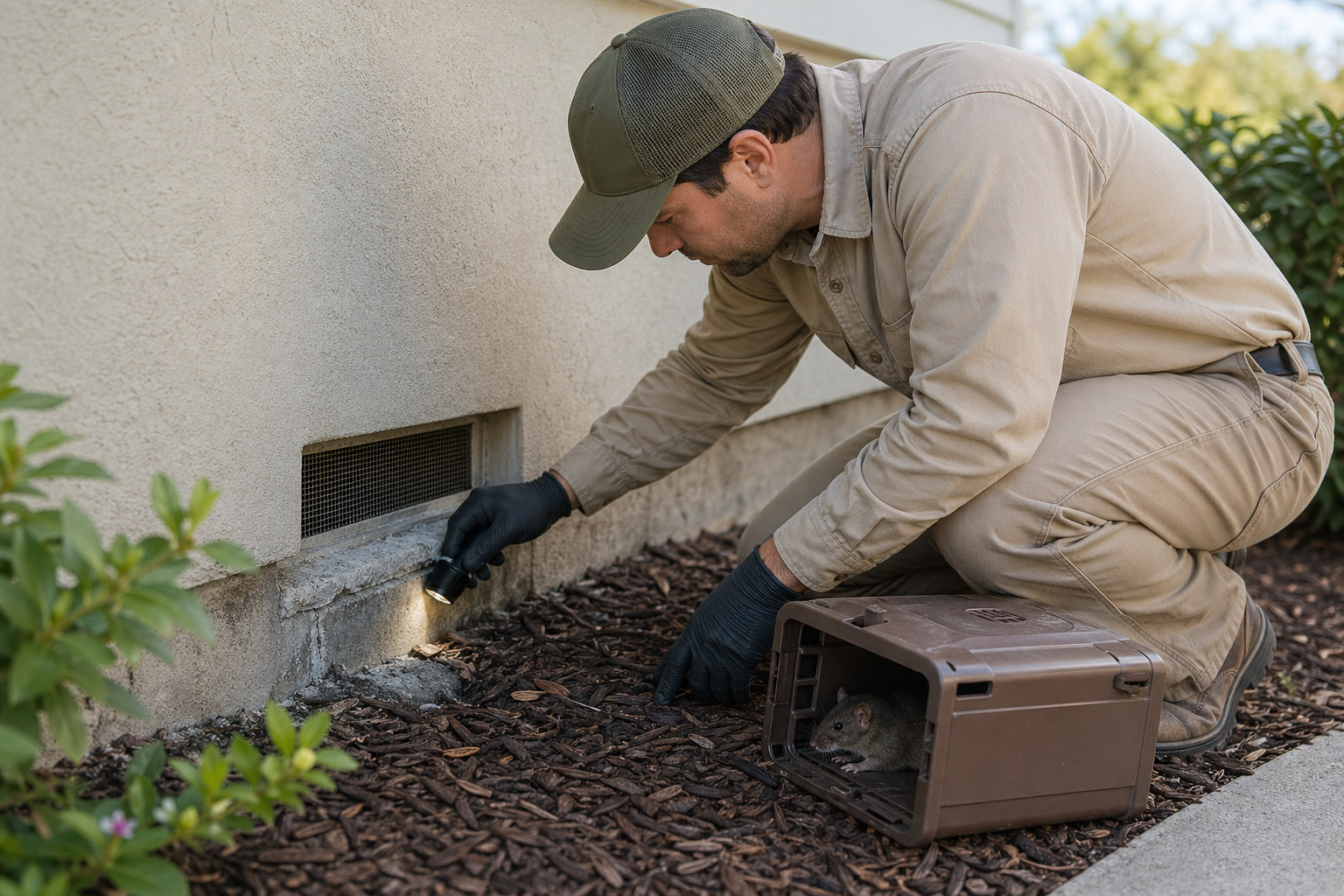
Roof-rat exclusion takes time because the inspection must follow the animal’s climbing ability. UC IPM advises sealing openings larger than one-quarter inch when proofing a building for rats and mice, while noting that young rats may squeeze beneath a door with a gap of about one-half inch. The repair material also matters because rats can gnaw through foam, plastic, wood, and weak sealants.
Common inspection points include:
- Tile-roof edges, returns, valleys, and transitions.
- Gaps where fascia, soffit, stucco, or siding meet.
- Damaged attic, gable, foundation, and crawlspace vents.
- Roof penetrations around pipes, conduit, cables, and air-conditioning lines.
- Loose flashing around chimneys and roof additions.
- Garage-door corners, side seals, and damaged thresholds.
- Openings below exterior doors or around utility-room doors.
- Broken screens and uncapped or poorly protected vents.
- Tree limbs, vines, and utility lines that provide access to the roof.
The active entry may be surprisingly small or visually ordinary. Dark staining, hair, gnawing, droppings, tracks, and repeated camera activity can distinguish a used opening from a harmless construction gap.
What a Complete Roof-Rat Inspection Should Cover
A useful inspection connects four parts of the problem: evidence inside, access outside, resources around the building, and the level of contamination. Each part affects the written scope.
Interior evidence
The attic, garage, cabinets, utility spaces, accessible crawlspace, and other reported areas are checked for droppings, nesting, odors, rub marks, damaged materials, and travel paths. The technician should document areas that cannot be safely reached rather than pretending every void has been inspected.
Exterior access
The roofline and elevations are examined for active and secondary openings. A secondary opening may not show fresh evidence today but could become the next route after the main gap is repaired. Permanent prevention requires a clear repair plan, not only a trap placed near the sound.
Food, water, and shelter
Fruit trees, bird feeders, pet bowls, trash storage, compost, dense vegetation, water sources, woodpiles, and clutter should be reviewed. These conditions may not be the building entry, but they can support repeated rat pressure around the property.
Cleanup and damage
The inspection should identify whether contamination is light and localized or spread through insulation and stored materials. Chewed wiring, damaged ducts, displaced insulation, and odor sources may require separate repair or specialist evaluation.
Why Trapping Alone Does Not Solve Entry
Trapping can be an important part of an active rodent-control plan, but it does not close a roof gap. If a building remains open, removing the current animals can create a temporary quiet period while the same route remains available to other rats.
The more durable sequence is to identify activity, reduce the animals using the structure, complete properly timed exclusion, monitor the result, and address contamination. The order may change when an opening must remain available during an active trapping phase, so repairs should be coordinated with the control plan.
Poison used without careful placement and building correction also creates practical problems. A poisoned rat can die in an inaccessible attic or wall void, causing odor and insect activity. Rodenticides can expose children, pets, and nontarget wildlife if they are used incorrectly. Product labels and California requirements must be followed, and building entry should still be corrected.
Safe Cleanup of Roof-Rat Droppings and Nesting Material
Do not sweep or vacuum dry rodent droppings, urine, or nesting material. The CDC rodent-cleanup guidance recommends ventilating enclosed spaces before cleanup, wearing gloves, soaking contaminated material with an appropriate disinfectant, allowing the required contact time, and wiping the material up rather than stirring it into the air.
Small, accessible deposits and a heavily contaminated attic are not the same project. Extensive droppings, dead rodents, strong odor, damaged insulation, or contamination in ventilation systems may require additional protective equipment and professional cleanup. Contaminated exposed insulation may need to be bagged and removed rather than surface cleaned.
Cleanup should follow active removal and exclusion planning. Sanitizing an attic while rats continue to enter can expose the same area to new urine and droppings. Advanced Wildlife Removal evaluates attic cleanup, sanitation, and insulation work as part of the property-specific scope.
Reduce Roof-Rat Pressure Around the Yard
Structural exclusion protects the building, while environmental changes reduce the number of reasons rats remain close to it. Orange County Vector Control recommends harvesting ripe fruit promptly, removing fallen produce, avoiding outdoor pet food overnight, trimming dense vegetation, organizing storage, and correcting unnecessary water sources.
Practical property steps include:
- Pick ripe citrus, avocados, peaches, plums, nuts, and other produce.
- Collect fallen fruit and clean up spilled bird seed.
- Feed pets only what they will eat and bring bowls inside at night.
- Store pet food, seed, and dry goods in durable containers with tight lids.
- Keep trash and compost containers closed and clean.
- Thin dense ivy and ornamental plantings that create sheltered runways.
- Trim branches and climbing plants away from roofs and walls.
- Raise wood and lumber storage and keep it away from the building.
- Repair leaky faucets and remove unnecessary standing water.
- Keep garages, sheds, and storage rooms organized enough to reveal activity.
These changes do not replace exclusion. A rat may still enter a building with fewer outdoor resources if an accessible opening remains. The strongest plan combines both.
Common Roof-Rat Control Mistakes
Sealing only the most obvious hole
Closing one opening without inspecting the remaining roofline can redirect animals to another gap. A repair plan should distinguish the active route from nearby secondary vulnerabilities.
Using foam as the permanent repair
Expanding foam alone is not rodent-proof. Rats can gnaw through it. Durable repairs use materials and fastening methods suited to the opening, surface, airflow requirement, and exposure to weather.
Ignoring tree and fence access
A clean ground-level perimeter does not prevent a climbing rat from reaching a tile roof through a tree canopy, vine, fence, or utility route.
Vacuuming dry droppings
Dry vacuuming or sweeping can put contaminated particles into the air. Follow current CDC guidance and obtain professional help for heavy contamination or difficult spaces.
Assuming quiet means the problem is gone
Activity can shift within a building, and rats may not make noise every night. Monitoring, inspection evidence, and confirmation after repairs are more reliable than a short quiet period.
Roof-Rat Prevention Checklist
- Inspect the roofline, vents, garage seals, and utility penetrations at least seasonally.
- Repair damaged screens, fascia, soffits, flashing, and door sweeps.
- Use gnaw-resistant materials appropriate for each opening.
- Keep branches and dense vegetation away from the structure.
- Harvest fruit and remove fallen produce promptly.
- Store food, feed, and trash in closed durable containers.
- Investigate new attic sounds, droppings, or odors before contamination spreads.
- Coordinate trapping, exclusion, monitoring, and cleanup as one plan.
- Document qualifying repairs and understand the written warranty terms.
Residents can review our complete Orange County wildlife-removal services, learn more about rodent proofing and entry-point sealing, or compare the broader signs that indicate wildlife service may be needed.
Orange County Roof-Rat FAQ
Are roof rats common in Orange County?
Yes. Orange County Vector Control describes roof rats as frequent building invaders that use fences and utility lines as runways and feed on fruit, nuts, bird seed, and pet food commonly found around local yards.
How do roof rats reach an attic?
They can climb trees, vines, fences, walls, pipes, and utility lines, then enter through tile gaps, vents, fascia returns, roof transitions, or utility penetrations. The route may be above ground and difficult to see from the yard.
Will trapping fix a roof-rat problem?
Trapping may remove active rats, but it does not repair the building. Long-term control also requires inspection, structural exclusion, monitoring, reduction of food and shelter, and cleanup when contamination is present.
Should I vacuum rat droppings from the attic?
No. Current CDC guidance says not to sweep or vacuum dry rodent urine, droppings, or nesting material. Contamination should be wetted with an appropriate disinfectant and handled using the recommended precautions. Heavy attic contamination may require professional cleanup.
How soon should I request an inspection?
Request an inspection when you hear repeated nighttime activity, find fresh droppings, see gnawing or rub marks, notice damaged fruit along a likely route, or discover a roofline opening with evidence. Early inspection can limit contamination and help prevent damage from spreading.
Request a Roof-Rat Inspection
A lasting roof-rat solution is built around evidence. The inspection identifies the animal, traces the route, documents active and secondary openings, evaluates contamination, and turns those findings into a written removal and repair plan.
24/7 Emergency Service Available for urgent rodent situations. Advanced Wildlife Removal provides roof-rat control, attic inspection, entry-point sealing, cleanup, and qualifying repair warranties for Orange County homes and managed properties. Call (714) 364-0629 or Request Free Inspection. Include the location and time of any sounds, where droppings were found, and whether trees, vines, fences, or utility lines touch the roof area.