Commercial wildlife problems create a different level of risk than a typical residential nuisance-animal call. At office buildings, retail centers, HOAs, warehouses, medical campuses, restaurants, schools, and mixed-use properties, animal activity affects more than one occupant. It can lead to tenant complaints, sanitation concerns, property damage, service interruptions, and repeat maintenance costs if the underlying access points are not identified and corrected.
Orange County properties deal with year-round wildlife pressure because mild weather, dense development, roof complexity, landscaped perimeters, dumpsters, and service corridors create reliable food and shelter opportunities. Rats, pigeons, bats, raccoons, squirrels, skunks, opossums, and other nuisance animals often use loading zones, roof returns, attic voids, crawlspaces, utility penetrations, storage areas, trash enclosures, and solar panel systems as protected travel and nesting zones.
This guide explains how commercial wildlife control works, what property managers and business owners should watch for, how prevention planning reduces repeat activity, and when to bring in professional removal, exclusion, or rodent proofing support. The focus is practical, professional, and built around how commercial properties in Orange County actually operate.
Why Commercial Wildlife Problems Need a Different Approach
Commercial wildlife service is not simply residential wildlife removal on a larger building. Business and managed properties have more access points, more foot traffic, more liability concerns, and more operational constraints. A single property may include storefronts, rooftop equipment, service alleys, common attic space, dumpsters, courtyards, irrigation lines, and tenant-specific improvement work that created gaps no one documented properly.
That complexity changes the inspection process. A professional evaluation must account for where animals are entering, where they are nesting or roosting, how they move through the structure, which areas are active during business hours, and which repairs will actually reduce future access without interfering with operations. It also matters whether the property is owner-occupied, multi-tenant, public-facing, or subject to specialized sanitation requirements.
For HOAs and commercial managers, prevention is especially important because recurring wildlife activity can damage the property’s reputation. Tenants and customers may tolerate a single incident; they are less likely to ignore repeat droppings, odor, noise above ceilings, or bird activity around entrances and parking structures. That is why long-term exclusion planning often matters as much as the removal itself.
Common Wildlife Problems at Orange County Commercial Properties
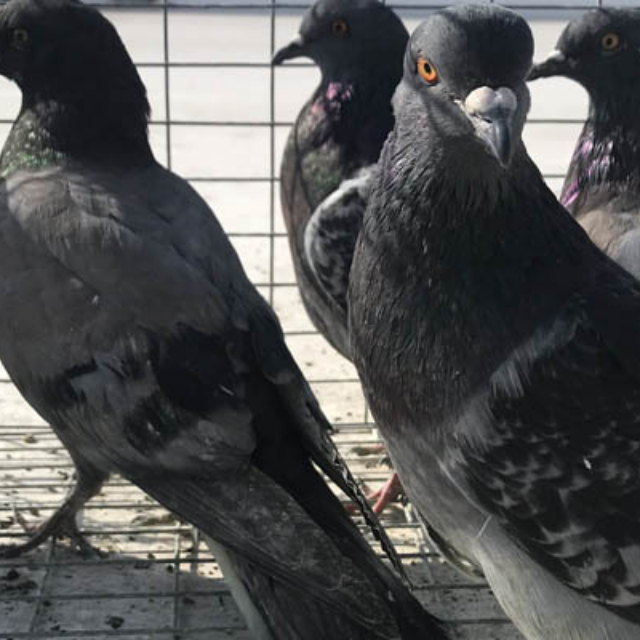
Commercial properties in Southern California see a wide range of wildlife activity depending on their layout and land use. Roof rats remain one of the most common issues, especially where rooflines connect to trees, landscape screening, trash storage, or food-service operations. Birds, particularly pigeons and other roosting species, often create recurring problems at ledges, signage, roof equipment, solar installations, and loading canopies.
Other common calls involve raccoons in attics or roof voids, bats at soffits and vents, squirrels using upper-level openings, skunks around storage and landscape edges, and opossums denning below decks, stairs, or low-access utility zones. On some sites, more than one species may be present at the same time, which is why the inspection has to focus on evidence and access patterns rather than assumptions based on a single sighting.
Frequent commercial wildlife trouble spots
- Trash enclosures and grease-adjacent service areas
- Roof returns, parapets, vents, and HVAC penetrations
- Attic voids above offices, suites, and storage rooms
- Loading docks, warehouse edges, and roll-up door gaps
- Solar panels, signage frames, and covered walkways
- Landscaped perimeters, retaining walls, and irrigation corridors
- Parking structures, detached garages, and utility rooms
These are not just nuisance zones. They are also the places where damage, contamination, and recurring re-entry tend to begin.
Warning Signs Property Managers Should Not Ignore
Wildlife problems rarely begin with a direct daytime sighting. More often, the first signs come from building staff, vendors, tenants, or maintenance teams who notice something unusual before management has confirmed the source. Because commercial buildings are larger and more segmented than homes, a small problem can stay hidden longer, especially if the activity is above ceilings, behind service equipment, or concentrated in non-public areas.
Common signs of active wildlife pressure
- Droppings near rooftop access, storage areas, electrical rooms, or trash zones
- Noise above ceilings, inside walls, or in attic spaces after hours
- Nesting debris around vents, ledges, signage, or roof equipment
- Strong odor in one suite, hallway, mechanical room, or service corridor
- Chewed wiring, insulation, sealant, or door sweeps
- Bird roosting on signage, awnings, panel edges, or entry structures
- Repeated tenant complaints about scratching, fluttering, odor, or visible droppings
- Evidence of digging or denning near landscape walls, decks, or outbuildings
When these signs appear repeatedly in the same location, they usually point to a structural or operational condition that needs more than cleanup alone. Spot cleaning droppings or setting a few traps may reduce symptoms temporarily, but it will not fix an open vent, a roof gap, or a food-source issue that keeps attracting animals back to the property.
How Commercial Wildlife Inspections Work
An effective commercial wildlife inspection follows the movement pattern of the animal, not just the place where the complaint originated. For example, droppings in one tenant suite may actually relate to activity above a shared corridor. Roosting birds near a storefront may be nesting under solar panels on the roof. Nighttime rat movement in a warehouse may begin at a dumpster enclosure, continue along fencing, and enter through a roll-up door edge or utility penetration.
That is why inspection usually combines interior evidence with a full exterior review. Rooflines, vent screens, service openings, drainage routes, access doors, parapets, loading areas, trash placement, and surrounding vegetation all matter. In larger properties, documenting these conditions helps ownership or management decide which corrections are urgent, which are preventive, and which should be phased with other repairs.
A commercial inspection may include
- Review of complaint history from tenants, staff, or maintenance teams
- Inspection of rooflines, vents, utility penetrations, and exterior gaps
- Evaluation of droppings, nesting, odor, and travel-path evidence
- Assessment of bird pressure at ledges, solar panels, and equipment areas
- Inspection of attics, crawlspaces, voids, and common-access service areas
- Identification of conditions contributing to repeat access or roosting
- Recommendations for removal, exclusion, cleanup, and prevention sequencing
The better the documentation, the easier it becomes to move from reactive service calls to a property-level prevention strategy.
Bird Control for Commercial Buildings and Solar Installations
Bird issues are among the most visible wildlife problems on commercial sites. Repeated roosting, nesting, and droppings can affect storefront appearance, customer walkways, solar panel efficiency, rooftop equipment, and drainage. At office parks, retail centers, HOAs, and industrial sites, bird problems often escalate because the original design unintentionally created protected ledges, gaps, or sheltered voids that birds can reuse season after season.
Professional bird control focuses on identifying the pressure area and matching it to the right exclusion or deterrent method. In some cases that means screening, ledge protection, or access blocking. In others, it may involve solar panel bird proofing where birds are nesting beneath panel arrays and leaving droppings across the roof surface.
Common commercial bird-problem zones
- Signage frames and architectural ledges
- Walkway canopies and covered entrances
- Roof-mounted equipment and screen walls
- Solar panel arrays on flat and low-slope roofs
- Parking structures and beam intersections
- Open loading covers, mezzanines, and upper dock framing
Because birds can create both sanitation and public-facing appearance issues, early intervention usually protects the property better than waiting for roosting to become established.
Rodent Pressure, Sanitation, and Entry-Point Sealing
Rodent problems at commercial properties are often tied to food handling, trash storage, structural gaps, and predictable travel routes. Restaurants, retail centers, mixed-use developments, office campuses, and storage facilities all create conditions that rats and mice can exploit if exclusion is incomplete. This is especially true where trash collection zones, landscape edges, utility paths, and roof access points overlap.
Trapping alone is rarely enough on a commercial site with repeat activity. Rodents often continue using the same corridors unless the property also addresses structural openings and the conditions supporting travel. That is where rodent proofing becomes critical. It helps close the access routes that allow animals to move from exterior harborages into attics, ceilings, garages, storage rooms, and wall voids.
Commercial rodent prevention priorities
- Dumpster-area sanitation and secure trash handling
- Roll-up door alignment, seals, and side gaps
- Utility penetrations at electrical, plumbing, and telecom entries
- Roofline access from trees, fencing, and adjacent structures
- Storage practices that hide droppings, rub marks, or nesting material
- Monitoring of attic and ceiling voids where noise or odor has been reported
If staff or tenants are already hearing activity after hours, it may be time to investigate for rat removal or targeted attic and upper-level travel routes before damage spreads further.
Prevention Planning for HOAs, Retail Centers, and Multi-Tenant Sites
HOAs, strip centers, office campuses, and multi-tenant commercial properties often struggle with wildlife issues because no single occupant controls every contributing factor. One suite may keep doors open, another may generate food waste, a vendor may store materials against the building, and a roof repair from years ago may have left an unsealed transition. Without coordinated prevention, the property remains vulnerable even after a successful removal.
That is why a professional wildlife plan for these properties should distinguish between immediate action items and long-term preventive corrections. Some repairs may be quick and localized; others may need board approval, vendor scheduling, or phased budgeting. The important point is documenting what matters most first so management can act strategically rather than react to each complaint separately.
Useful planning categories for managed properties
- Immediate life-safety or sanitation concerns
- Active entry points currently allowing animals into the structure
- High-pressure exterior conditions likely to cause repeat access
- Bird roosting or nesting areas affecting common-use spaces
- Cleanup needs after contamination, droppings, or nesting debris
- Deferred improvements that support long-term exclusion goals
For many HOAs and commercial managers, the value of inspection is not just confirming the current animal. It is creating a clear roadmap for what needs to be corrected to reduce future service calls.
When Wildlife Activity Becomes a Business Risk
Wildlife issues can move from nuisance to business risk quickly when they affect public-facing areas, sanitation-sensitive operations, or critical infrastructure. Bird droppings near an entrance, rodents in a stock room, or raccoon activity above a tenant suite can affect reputation, maintenance response, and operating confidence even before extensive damage is visible.
Property owners should treat wildlife activity with greater urgency when it affects:
- Restaurants, hospitality, and food-service operations
- Medical, wellness, or child-focused facilities
- Retail entries, outdoor seating, or customer queuing areas
- Electrical rooms, telecom lines, or HVAC systems
- Attics and ceiling spaces shared by multiple tenants
- HOA common areas used daily by residents or visitors
In those environments, a documented professional response can help management act faster and more consistently than informal trial-and-error measures.
Cleanup, Contamination, and Post-Removal Work
Once active wildlife is removed or excluded, some properties still need additional work to restore affected areas. Droppings, nesting material, feathers, urine staining, or damaged insulation may remain in attics, storage voids, crawlspaces, or access corridors. Ignoring those conditions can leave odor in place, confuse future inspections, and create an incomplete resolution even after the animals are gone.
Commercial follow-up may include sanitation guidance, removal of contaminated debris, and recommendations for whether broader attic cleanup or localized material removal is appropriate. The right scope depends on where the activity occurred, how long it was present, and whether the space affects other occupied areas.
Cleanup should follow, not replace, the correction of active entry points. Restoring a space before exclusion is complete can expose the same area to repeat contamination.
DIY vs. Professional Commercial Wildlife Service
Basic property maintenance is still important. Staff can help by improving trash discipline, reporting early warning signs, trimming vegetation, and documenting where activity repeats. However, most commercial wildlife issues should not rely on DIY measures alone once animals are inside the structure or affecting tenants, customers, or shared building systems.
Professional service is typically the better choice when:
- Activity is recurring across suites or common areas
- Bird pressure is affecting solar panels, entrances, or signage
- Noise or odor is coming from above ceilings or inside wall spaces
- Roof access or upper-level inspection is needed to confirm entry points
- Droppings or nesting are present in sanitation-sensitive areas
- Management needs a prevention plan rather than a one-time temporary fix
The commercial setting changes the consequences of delay. What might be inconvenient at a residence can become a much larger operational problem at a business or managed property.
Professional Commercial Wildlife Removal in Orange County
Advanced Wildlife Removal provides inspection-driven support for Orange County businesses, HOAs, property managers, industrial sites, office properties, retail centers, and other commercial facilities dealing with nuisance-animal activity. Service recommendations are designed around the real building conditions found at the property, including access routes, structural vulnerabilities, pressure zones, and whether bird, rodent, or broader wildlife activity is involved.
Depending on the site, that may involve commercial wildlife control, bird control, rodent proofing, wildlife removal, or targeted prevention planning for repeat access issues. The goal is not only to address the immediate problem, but to reduce the chance that the same conditions bring animals back to the property again.
Commercial Wildlife Prevention FAQ
What types of commercial properties need wildlife inspections?
Retail centers, office buildings, warehouses, restaurants, HOAs, schools, medical offices, industrial sites, and mixed-use developments can all benefit from inspection when animal activity, droppings, nesting, or repeated complaints are present.
Is bird control different on commercial buildings than on homes?
Yes. Commercial buildings often have larger roosting surfaces, more signage, more rooftop equipment, and more public-facing liability. Control methods must match both the pressure area and the building use.
Can rodent trapping solve a recurring business problem by itself?
Usually not. Repeating commercial rodent issues often require structural exclusion and sanitation corrections in addition to trapping or active removal measures.
When should a property manager request professional help?
As soon as activity begins repeating, tenants are complaining, droppings or odor are present, or the source appears to involve rooflines, attics, solar panels, service voids, or sanitation-sensitive areas.
Why is prevention planning so important for HOAs and multi-tenant sites?
Because responsibility is shared across common areas, vendor activity, landscaping, trash handling, and unit-level conditions. A written prevention plan helps management prioritize the repairs and corrections that actually reduce repeat problems.
Request a Commercial Wildlife Inspection
If your business, HOA, or managed property is dealing with repeated droppings, bird nesting, rodent evidence, attic noise, roofline activity, or recurring tenant complaints, the best next step is a professional inspection. Early documentation makes it easier to control the current problem and define the preventive work needed to protect the property long term.
24/7 Emergency Service Available for active commercial wildlife situations. Request Free Inspection to discuss conditions at your Orange County commercial property. We can help identify likely access points, clarify which wildlife pressures are active, and recommend the right combination of removal, exclusion, and prevention support for the site.